
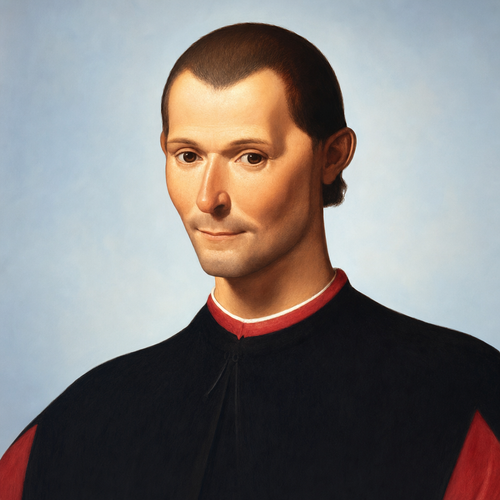
Niccolò Machiavelli
Niccolò di Bernardo dei Machiavelli (1469–1527) was a Florentine diplomat, philosopher, historian, and author whose penetrating analysis of power transformed how humanity understands governance. Born in Florence at the height of the Italian Renaissance, Machiavelli served the Florentine Republic as a senior official and diplomat for nearly fifteen years, negotiating with popes, emperors, and princes — experience that gave him an unsentimental, firsthand understanding of how political power actually works. When the Medici family returned to power in 1512, he was expelled from office, briefly imprisoned, and forced into exile on his farm outside Florence.
It was during this political exile that Machiavelli wrote his most enduring works. The Prince, composed in 1513 though not published until 1532 — five years after his death — offered a revolutionary departure from idealistic political theory. Rather than describing how rulers ought to behave, Machiavelli described how effective rulers actually succeed: through clear-eyed realism, strategic flexibility, and the willingness to act decisively even when conventional morality might counsel hesitation. The work scandalized generations of readers and fascinated them in equal measure, earning Machiavelli a reputation as the founder of modern political science.
For listeners engaged in leadership, strategy, and personal development, Machiavelli's insights remain startlingly relevant. His core message — that success demands an honest understanding of human nature, institutional realities, and the dynamics of power — resonates as strongly in boardrooms and organizations today as it did in the courts of Renaissance Italy. Through Nightingale-Conant, audiences encounter Machiavelli's timeless wisdom reframed for the modern pursuit of influence, effectiveness, and principled leadership.