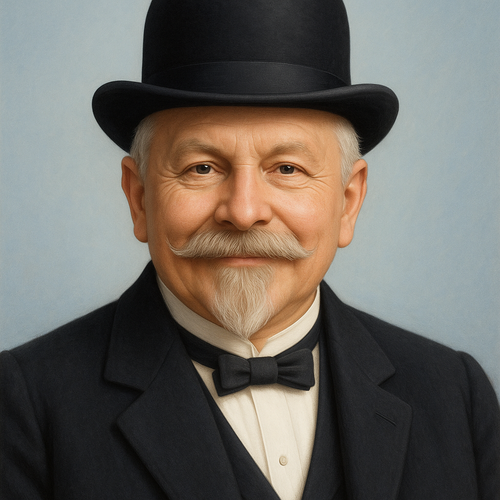
Émile Coué de la Châtaigneraie (1857–1926) was a French psychologist, pharmacist, and pioneer of conscious autosuggestion whose methods transformed the way millions of people approached self-improvement and healing. Born in Troyes, France, Coué trained as a pharmacist and spent nearly three decades dispensing medicines before a profound realization redirected his life's work: the words a healer spoke to a patient often mattered as much as the remedy itself. Observing what modern science would come to call the placebo effect, he began studying hypnotic techniques under the leading mind scientists of Nancy, then set out to develop a more accessible, patient-centered approach to mental and physical wellness.
In 1910, Coué moved to Nancy and opened a free clinic where he reportedly guided as many as 40,000 patients per year through his simple yet revolutionary technique. Rather than relying on the authority of a hypnotist, he taught people to harness the power of their own imagination. His central insight was that imagination, not willpower, governs behavior and health — when the two conflict, imagination always wins. To work with that truth rather than against it, he introduced his now-famous daily affirmation: "Every day, in every way, I am getting better and better" (Tous les jours à tous points de vue je vais de mieux en mieux). Repeated twenty times each morning and evening in a calm, relaxed state, the phrase was designed to speak directly to the unconscious mind and activate its natural capacity for self-repair. "I have never cured anyone in my life," Coué said. "All I do is show people how they can cure themselves."
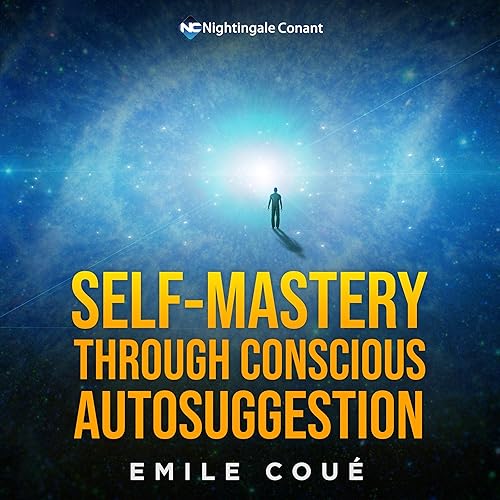
His 1920 book Self-Mastery Through Conscious Autosuggestion spread his ideas across Europe and America, influencing an entire generation of personal development thinkers — including Norman Vincent Peale, Napoleon Hill, and Maxwell Maltz. At Nightingale-Conant, Coué's legacy lives on in the programs that explore the mind's role in achievement, health, and lasting change. His core message — that the stories we tell ourselves shape our reality — remains as urgent and empowering today as it was a century ago.