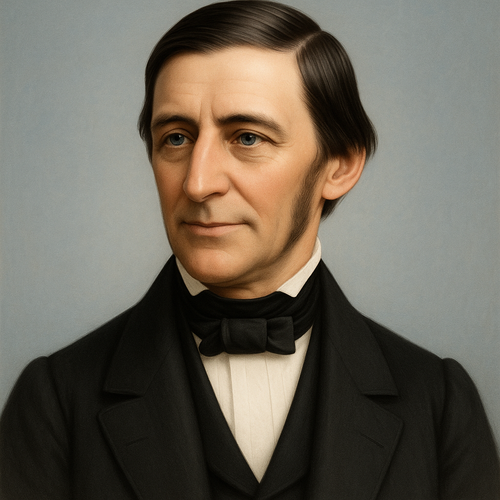
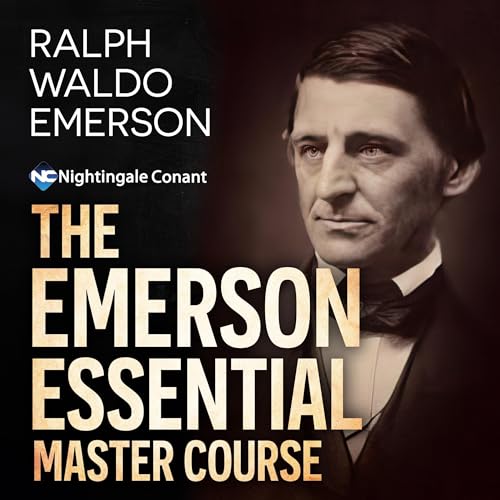
Ralph Waldo Emerson (1803–1882) was one of America's most influential essayists, philosophers, and poets — the central figure of the Transcendentalist movement and a towering voice in the literature of personal growth. Born in Boston, Massachusetts, Emerson trained as a Unitarian minister before turning to writing and lecturing, where he found his true calling as a guide to the interior life. His 1841 essay Self-Reliance remains one of the most powerful arguments ever written for trusting one's own instincts, rejecting social conformity, and living by personal conviction rather than inherited opinion.
At the heart of Emerson's philosophy is a radical faith in the individual. He believed that greatness lies not in following the crowd but in listening to the voice within — what he called the Over-Soul, the divine intelligence accessible to every human being. His essays, including Compensation, The American Scholar, and Nature, challenged readers to shed dependence on tradition and institutions and to claim their own authority over their lives. This message resonated deeply in his own era and continues to inspire personal development thinkers, entrepreneurs, and seekers of every kind.
Emerson's influence on Nightingale-Conant's legacy of human potential is profound and direct. The great teachers of the self-help tradition — from Napoleon Hill to Earl Nightingale — drew heavily on Emerson's conviction that thought shapes destiny and that the individual mind, properly disciplined and directed, is the source of all achievement. Friedrich Nietzsche called him "the most gifted of the Americans," and Walt Whitman credited Emerson as his "master." More than 140 years after his death, Emerson's call to self-trust and purposeful living remains as urgent and transformative as ever.